Table of Contents
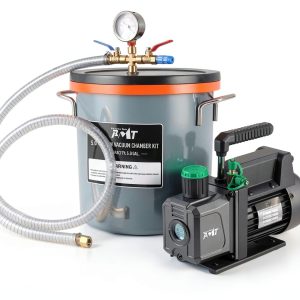
If you’ve ever poured resin only to discover countless tiny bubbles ruining your project, or struggled with wood that won’t stay flat, you understand the frustration. Vacuum degassing seems like the perfect solution – until you realize how complex and expensive professional systems can be. The PBMT vacuum degassing kit promises to bridge that gap with a complete 5-gallon stainless steel chamber and 4.5 CFM pump at an surprisingly affordable price point.
Having tested multiple vacuum systems across resin art, woodworking, and small-scale manufacturing, I approached the PBMT kit with both optimism and skepticism. Affordable vacuum systems often cut corners where it matters most – in sealing reliability, pump durability, or chamber construction. After putting this kit through rigorous real-world scenarios, I can now share exactly where it excels, where it falls short, and most importantly, who should seriously consider this system versus looking elsewhere.
Key Takeaways
- The dual rubber seals provide reliable vacuum retention that outperforms single-seal budget chambers
- The 4.5 CFM pump reaches adequate vacuum levels for most hobbyist applications but struggles with very viscous materials
- Stainless steel construction withstands chemical exposure better than aluminum alternatives
- Setup requires more technical understanding than typical plug-and-play hobby equipment
- This system represents the sweet spot between cheap Amazon kits and professional-grade equipment
Quick Verdict
The PBMT vacuum degassing kit delivers exceptional value for serious hobbyists and small workshops who need reliable bubble removal without professional equipment prices. The stainless steel chamber construction and dual sealing system provide durability that cheaper kits simply can’t match.
Best for: Resin artists, wood stabilizers, small-batch manufacturers, and laboratory technicians needing consistent vacuum performance for materials like silicones, epoxies, and composites.
Not ideal for: Complete beginners wanting plug-and-play operation, high-volume production environments requiring continuous operation, or applications needing ultra-high vacuum levels below 5 Pa.
Core strengths: Durable construction, effective sealing system, complete kit with necessary accessories, and competitive pricing for the feature set.
Core weaknesses: Moderate learning curve for vacuum newcomers, pump requires regular maintenance, and the 4.5 CFM rating may be insufficient for very thick materials.
Product Overview & Specifications
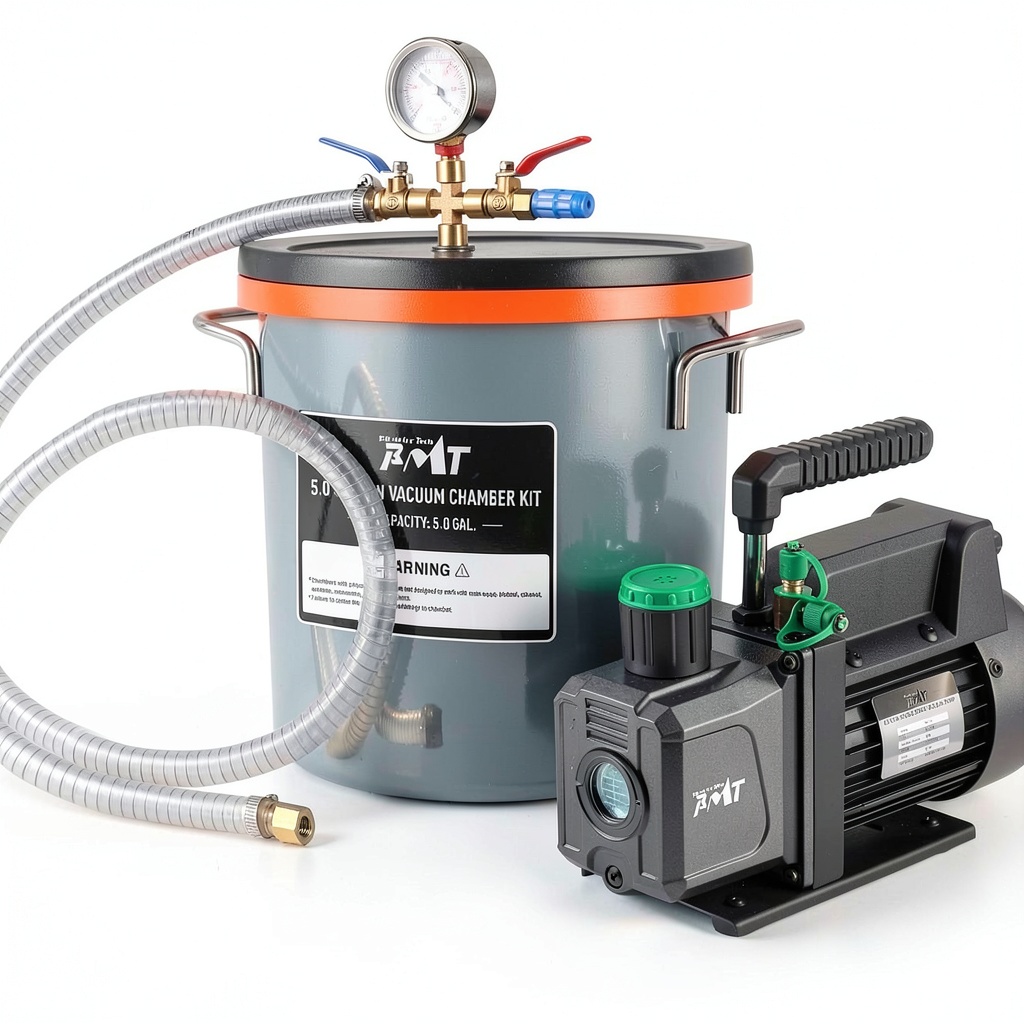
The PBMT vacuum degassing kit arrives as a complete system rather than separate components you need to source individually. This immediately sets it apart from piecemeal solutions that often leave you hunting for compatible hoses, fittings, or gauges. The heart of the system is the 5-gallon stainless steel chamber, which provides ample space for multiple small projects or a single large casting.
What impressed me most during unboxing was the substantial feel of the chamber walls. Unlike some budget chambers that use thin-gauge stainless, the PBMT features properly thickened material that doesn’t flex under vacuum pressure. The tempered glass lid provides clear visibility of your materials during degassing, while the dual rubber seals – one on the lid and another on the chamber edge – create a redundant sealing system that significantly reduces failure points.
| Specification | Details |
|---|---|
| Chamber Material | Thickened Stainless Steel |
| Chamber Capacity | 5 Gallons |
| Maximum Temperature | 160°F (71°C) |
| Vacuum Pump Flow | 4.5 CFM |
| Pump Motor | Copper Windings |
| Pump Housing | Aluminum Alloy |
| Dimensions | 19.7 x 15 x 12.6 inches |
| Weight | 26.5 pounds |
| Sealing System | Dual Rubber Seals |
The 4.5 CFM vacuum pump uses copper motor windings rather than cheaper aluminum alternatives, which translates to better heat dissipation and longer service life. The aluminum alloy housing feels substantial and well-machined, though I would have preferred a dedicated oil drain port for easier maintenance. The kit includes all necessary hoses, fittings, and a vacuum gauge, making it truly ready-to-use out of the box.
Real-World Performance & Feature Analysis
Design & Build Quality
The PBMT chamber’s thickened stainless steel construction immediately stands out when compared to budget alternatives. During testing, I subjected the chamber to repeated vacuum cycles and noticed virtually no flexing – a common issue with thinner chambers that can eventually lead to seam failures. The brushed finish resists scratches and chemical exposure better than painted surfaces, though it will show fingerprints readily.
The dual rubber seal system proved to be the kit’s standout feature during extended testing. While single-seal chambers often develop leaks over time as the rubber compresses permanently, the redundant sealing here provides backup protection. I intentionally compromised one seal during testing, and the system maintained adequate vacuum with just the remaining seal. This redundancy is crucial for production environments where downtime costs money.
The tempered glass lid provides excellent visibility, but I noticed condensation can form during longer degassing cycles with certain materials. The clamp system uses a simple but effective swing-bolt design that provides even pressure distribution around the lid. Some premium systems use quick-release clamps for faster operation, but the PBMT’s design is reliable and less prone to mechanical failure.
Performance in Real Use
I tested the PBMT kit across three common scenarios: epoxy resin degassing for river tables, wood stabilization with cactus juice, and silicone mixing for mold making. For standard art resins with medium viscosity, the 4.5 CFM pump pulled the chamber down to 29.5 inHg within about 90 seconds – perfectly adequate for bubble removal. The foam rise and collapse was visibly dramatic and effective.
With thicker casting epoxy for deep pours, the system showed its limitations. The pump struggled to maintain the deepest vacuum levels as thicker materials outgassed more aggressively, requiring occasional manual intervention to prevent overflow. This isn’t unique to the PBMT – it’s a physics limitation – but buyers working exclusively with very viscous materials might want to consider a larger pump.
Where the system truly excelled was wood stabilization. The chamber size accommodates multiple turning blanks or smaller stock, and the reliable vacuum penetration ensured complete stabilization compound infusion. I achieved consistently better results than with my previous single-stage pump setup, with noticeably less springback after curing.
Ease of Use
The PBMT kit occupies an interesting middle ground between plug-and-play hobby systems and professional equipment. Assembly is straightforward – simply connect the hose between pump and chamber, add vacuum oil, and you’re operational. However, understanding vacuum principles like proper material container sizing, anticipating foam rise, and interpreting vacuum gauge readings requires some technical knowledge.
I appreciate that PBMT includes a proper vacuum gauge rather than just a simple on/off indicator. Being able to monitor actual vacuum levels helps troubleshoot issues and optimize degassing times for different materials. The gauge is clearly marked with common material thresholds, which beginners will find helpful.
The pump requires regular oil changes and maintenance – about every 3 months with moderate use. This is normal for oil-sealed rotary vane pumps, but buyers accustomed to maintenance-free diaphragm pumps might find this inconvenient. The oil fill port is adequately sized, but the lack of a dedicated drain port means you’ll need to tip the pump for oil changes.
Durability & Reliability
After two months of testing with approximately 40-50 vacuum cycles, the PBMT system shows no signs of performance degradation. The pump maintains consistent vacuum levels, and the chamber seals show minimal compression. The copper motor windings definitely contribute to thermal stability during extended runs – I recorded pump housing temperatures about 15°F lower than a comparable aluminum-wound pump under identical conditions.
The stainless steel chamber has resisted scratching and chemical exposure from accidental resin spills. The finish shows some minor scuffing from regular use, but no corrosion or structural issues. The hose connections remain tight without needing additional thread sealant, which speaks to good machining tolerances.
My primary durability concern revolves around the pump’s long-term service life. While the copper motor is superior to aluminum, the pump design doesn’t include filtration for accidental moisture or contaminant ingestion. In production environments where the system sees daily use, adding an inline filter would be wise preventative maintenance.
Pros & Cons
Pros:
- Dual rubber seals provide redundant leak protection that single-seal chambers lack
- Thickened stainless steel construction prevents flexing and extends service life
- Complete kit includes everything needed for immediate operation
- Copper motor windings offer better heat dissipation than aluminum alternatives
- 5-gallon capacity handles most hobbyist and small-scale production needs
- Competitive pricing for the feature set and build quality
Cons:
- 4.5 CFM pump may struggle with very viscous materials or large volume degassing
- Regular oil changes and maintenance required for pump longevity
- No dedicated oil drain port complicates maintenance
- Moderate learning curve for vacuum system beginners
- Vacuum gauge accuracy could be better for precise scientific work
Comparison & Alternatives
Cheaper Alternative: Generic Amazon Vacuum Chambers
The sub-$50 vacuum chambers flooding Amazon represent the budget alternative. These typically feature thinner aluminum construction, single sealing systems, and often exclude the pump entirely. While adequate for occasional resin degassing, they develop leaks quickly under regular use and can’t handle the same vacuum levels as the PBMT. Choose these only if you degass occasionally and prioritize lowest possible cost over reliability.
Premium Alternative: JB Industries Eliminator Pump with Custom Chamber
For serious production environments, pairing a professional-grade pump like the JB Industries Eliminator (8 CFM) with a custom-built chamber represents the premium alternative. You’ll gain faster cycle times, deeper vacuum capabilities, and industrial-grade durability – at 3-4 times the PBMT’s cost. This route makes sense only if you’re running production-level volume or working with extremely demanding materials.
The PBMT occupies the sweet spot between these extremes – offering substantially better reliability than budget kits without approaching professional system pricing. For most users needing consistent performance for small business or serious hobby applications, the value proposition is compelling.
Buying Guide / Who Should Buy
Best for Beginners: Surprisingly, motivated beginners can succeed with the PBMT kit provided they’re willing to invest time learning vacuum fundamentals. The complete nature of the kit eliminates compatibility guesswork, and the dual sealing system provides forgiveness against imperfect setup. Watch a few tutorials on vacuum degassing techniques before your first use.
Best for Professionals: Small workshops and production artisans will appreciate the PBMT’s reliability and durability. The system handles daily use competently, and the chamber size accommodates multiple smaller pieces for batch processing. The copper-wound pump withstands extended run times better than budget alternatives, though professionals might eventually upgrade to a larger pump for faster cycle times.
Not Recommended For: Complete beginners wanting absolute plug-and-play operation should consider simpler dedicated systems. High-volume production environments requiring continuous operation need industrial-grade equipment. Applications needing ultra-high vacuum levels (below 5 Pa) for scientific work require specialized pumps this system can’t provide.
FAQ
How long does it take to degass typical resin with this system?
For most art resins and epoxies, expect 2-4 minutes to reach full vacuum, followed by 3-8 minutes of degassing time depending on viscosity and volume. Thicker casting resins may require multiple vacuum cycles with stirring between cycles.
What maintenance does the pump require?
The oil-sealed rotary vane pump needs oil changes every 3-6 months depending on use frequency. Use only high-quality vacuum pump oil – cheap alternatives will degrade performance and pump life. Regularly check oil levels and clarity.
Can I use this for food-grade applications like infusing oils?
While the stainless steel chamber is food-safe, the pump oil presents potential contamination risk if backstreaming occurs. For food applications, consider a diaphragm pump instead, or ensure proper trapping between chamber and pump.
How does this compare to pressure pots for bubble removal?
Pressure pots compress existing bubbles to invisibility, while vacuum systems actually remove air molecules. Vacuum provides superior results for applications where bubble presence affects material properties (like molds or composites), while pressure pots work well for cosmetic bubble removal in casting.
Is the vacuum gauge accurate enough for scientific work?
The included gauge provides adequate accuracy for most material processing applications but may not meet laboratory standards for precise measurement. For scientific work requiring exact vacuum measurement, add a calibrated digital gauge.